
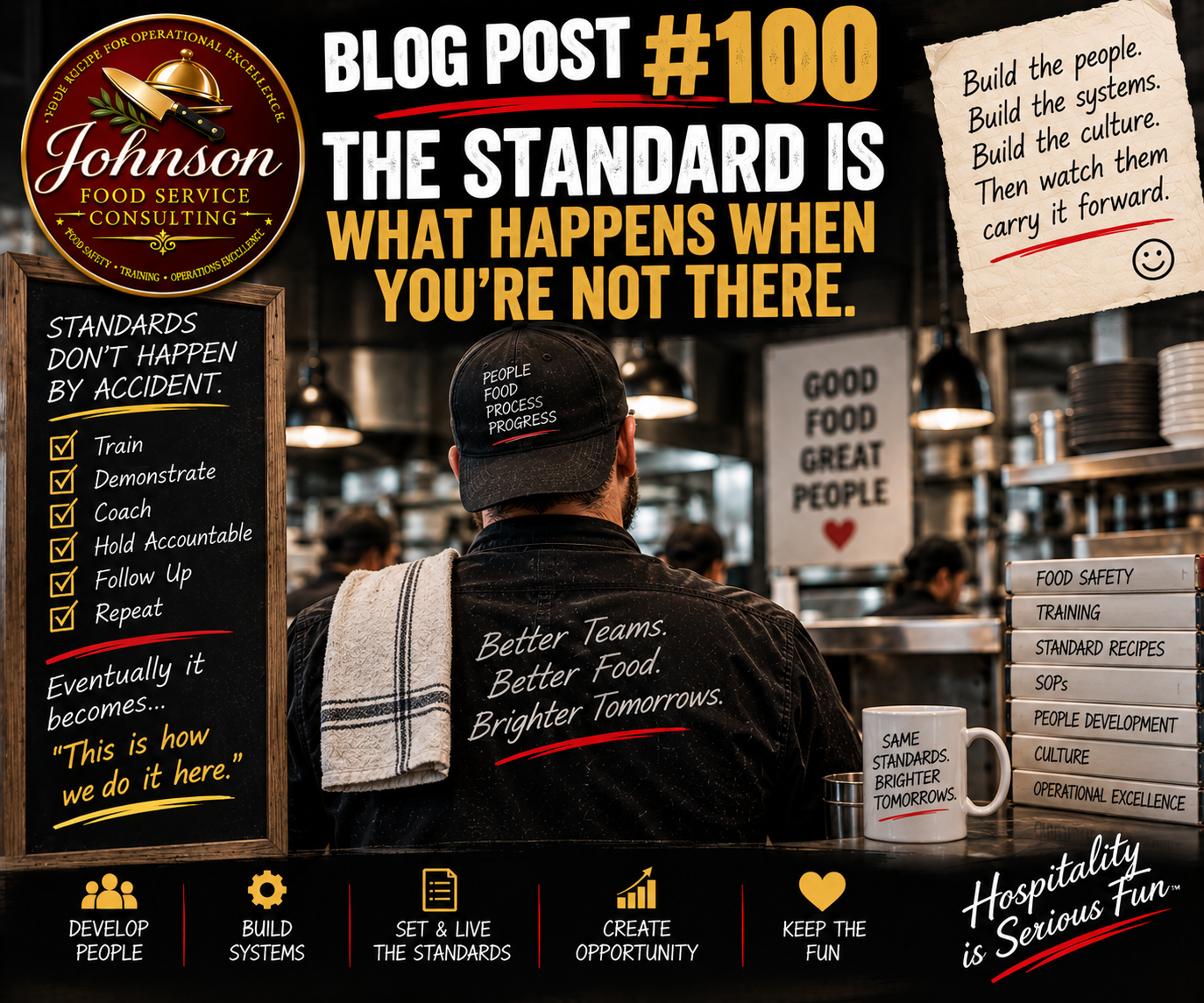
The Standard Is What Happens When You're Not There
The true measure of restaurant leadership is whether standards, training, and culture continue when the leader isn't in the building.
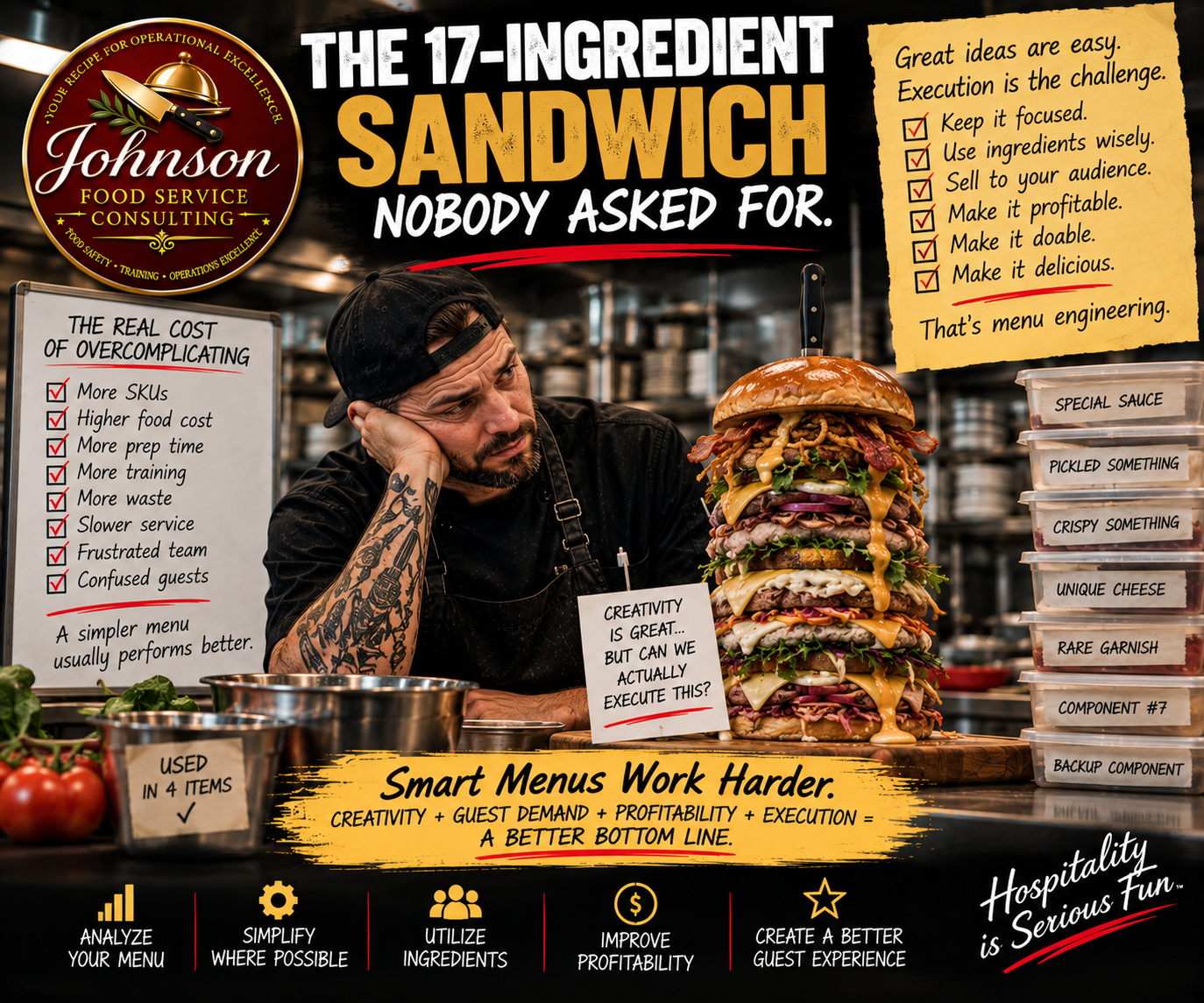
The 17-Ingredient Sandwich Nobody Asked For
Menu rationalization can improve execution, reduce SKUs, control food cost, and create a stronger guest experience.
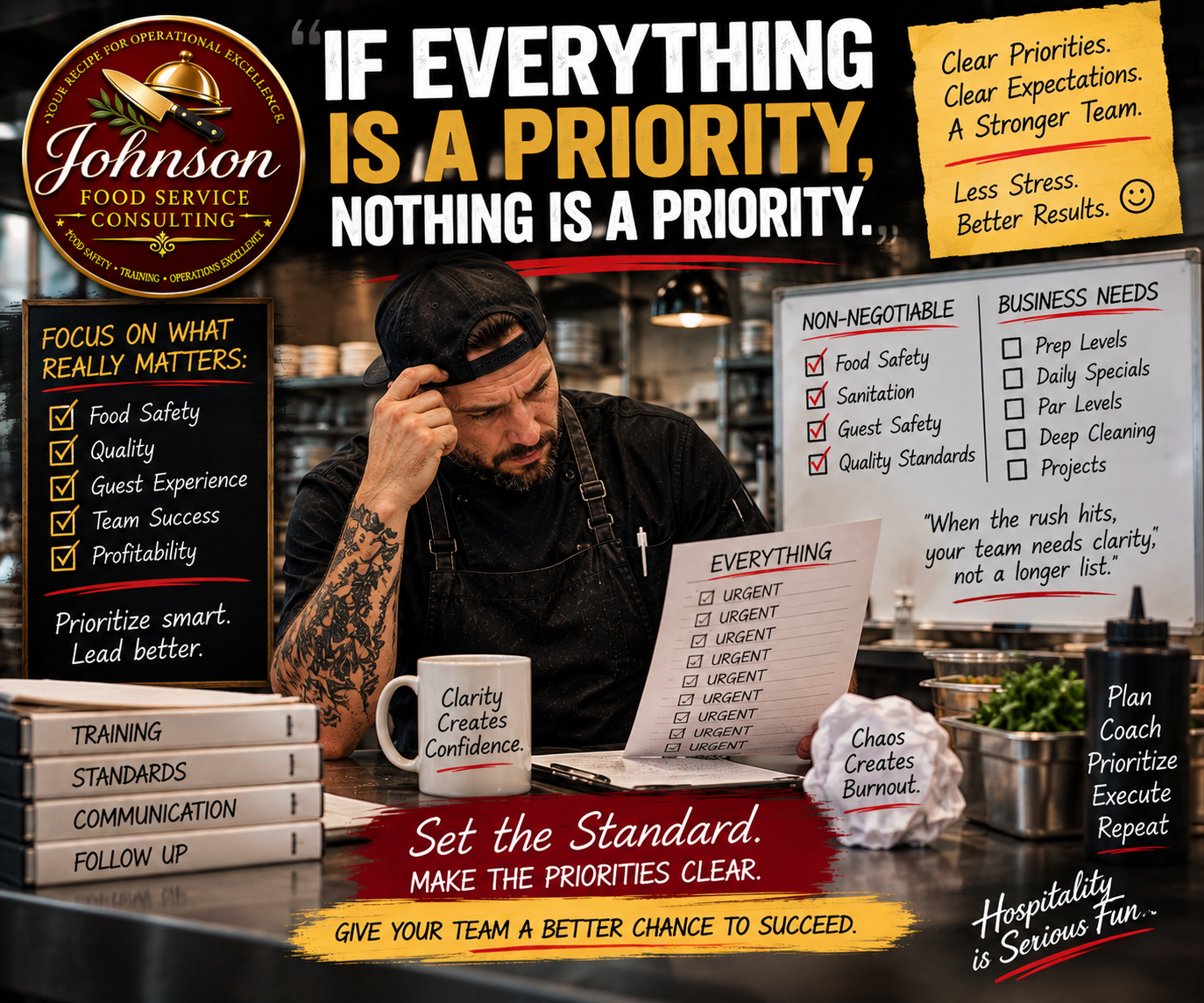
If Everything Is a Priority, Nothing Is a Priority
Clear standards help restaurant teams understand what matters most, improve execution, and reduce confusion during busy shifts.
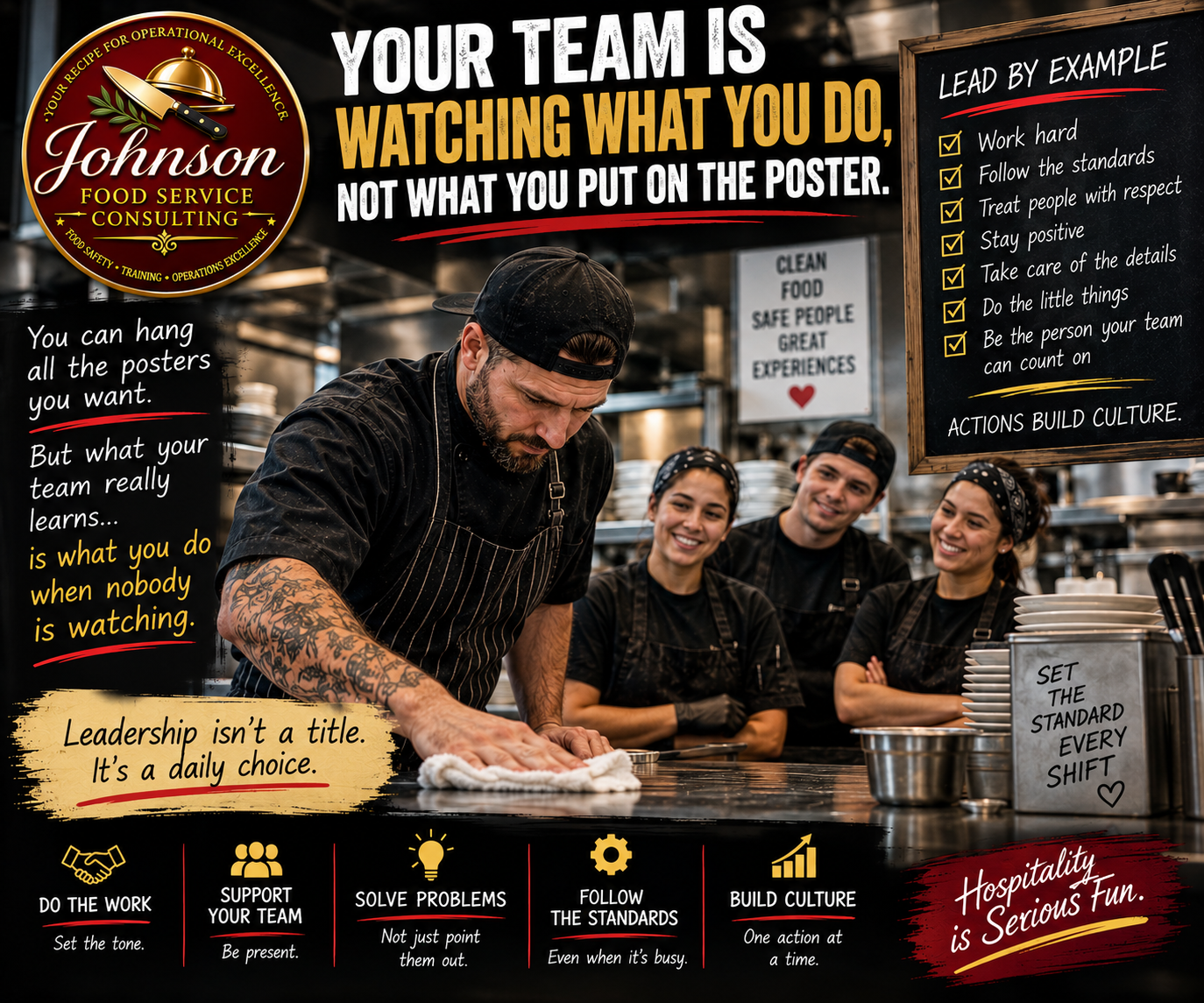
Your Team Is Watching What You Do, Not What You Put on the Poster
Leading by example means consistently demonstrating the standards and behaviors you expect from your team.
You can hang all the posters you want.
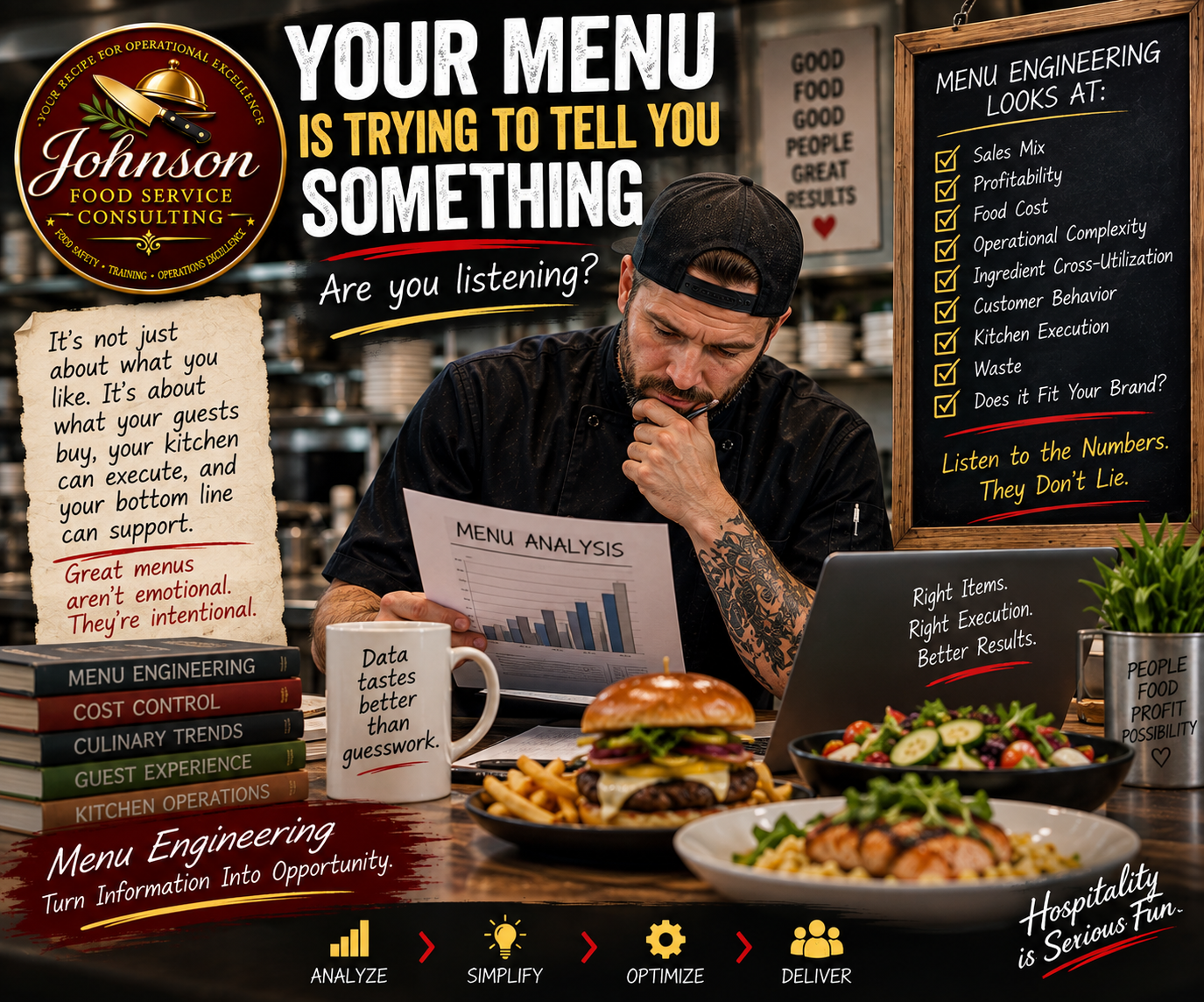
Your Menu Is Trying to Tell You Something. Are You Listening?
Menu engineering uses sales mix, profitability, operational complexity, and customer behavior to help operators make smarter menu decisions.
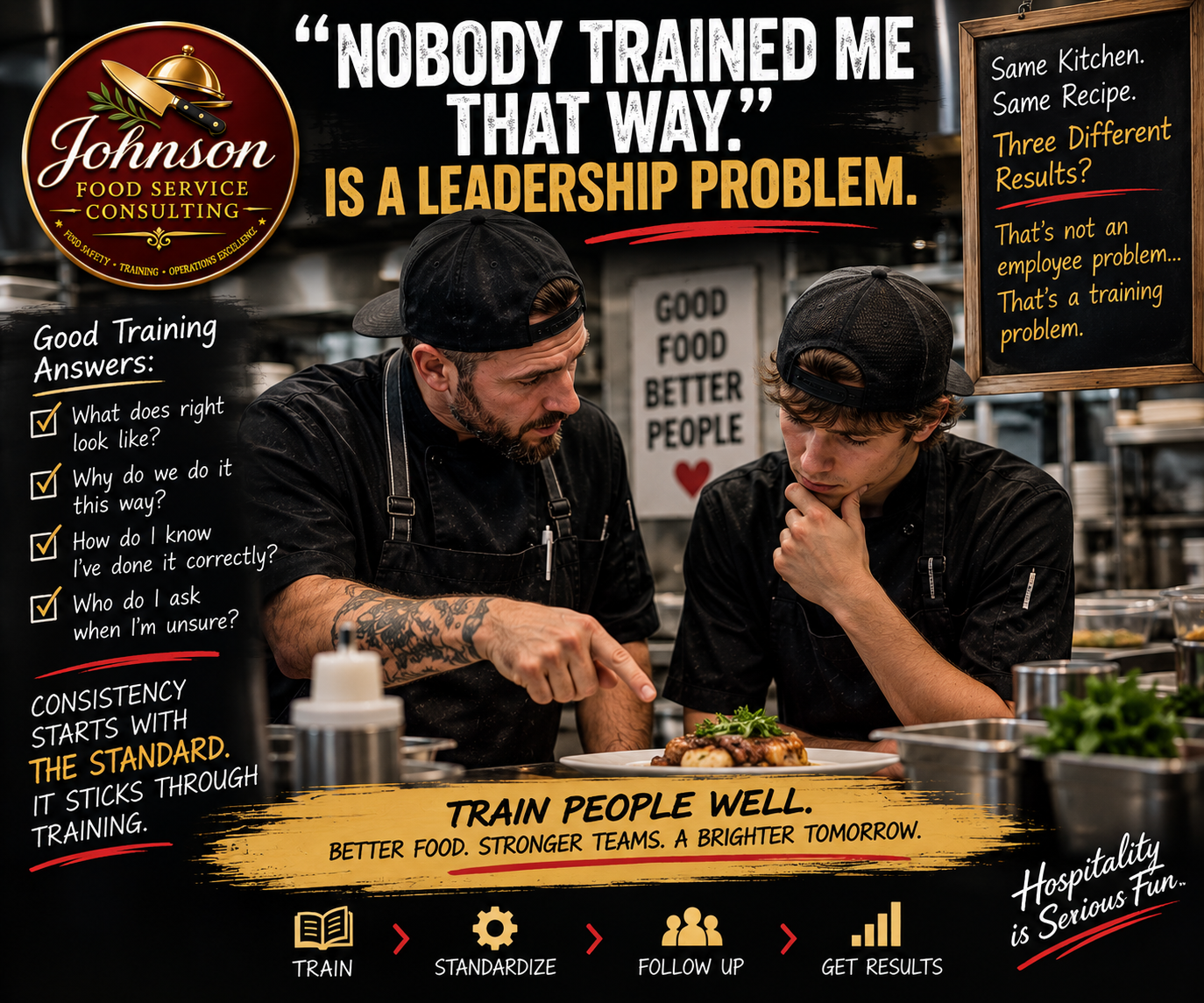
“Nobody Trained Me That Way” Is a Leadership Problem
When employees perform the same task differently, the problem may not be the employee. Consistent training creates consistent standards.
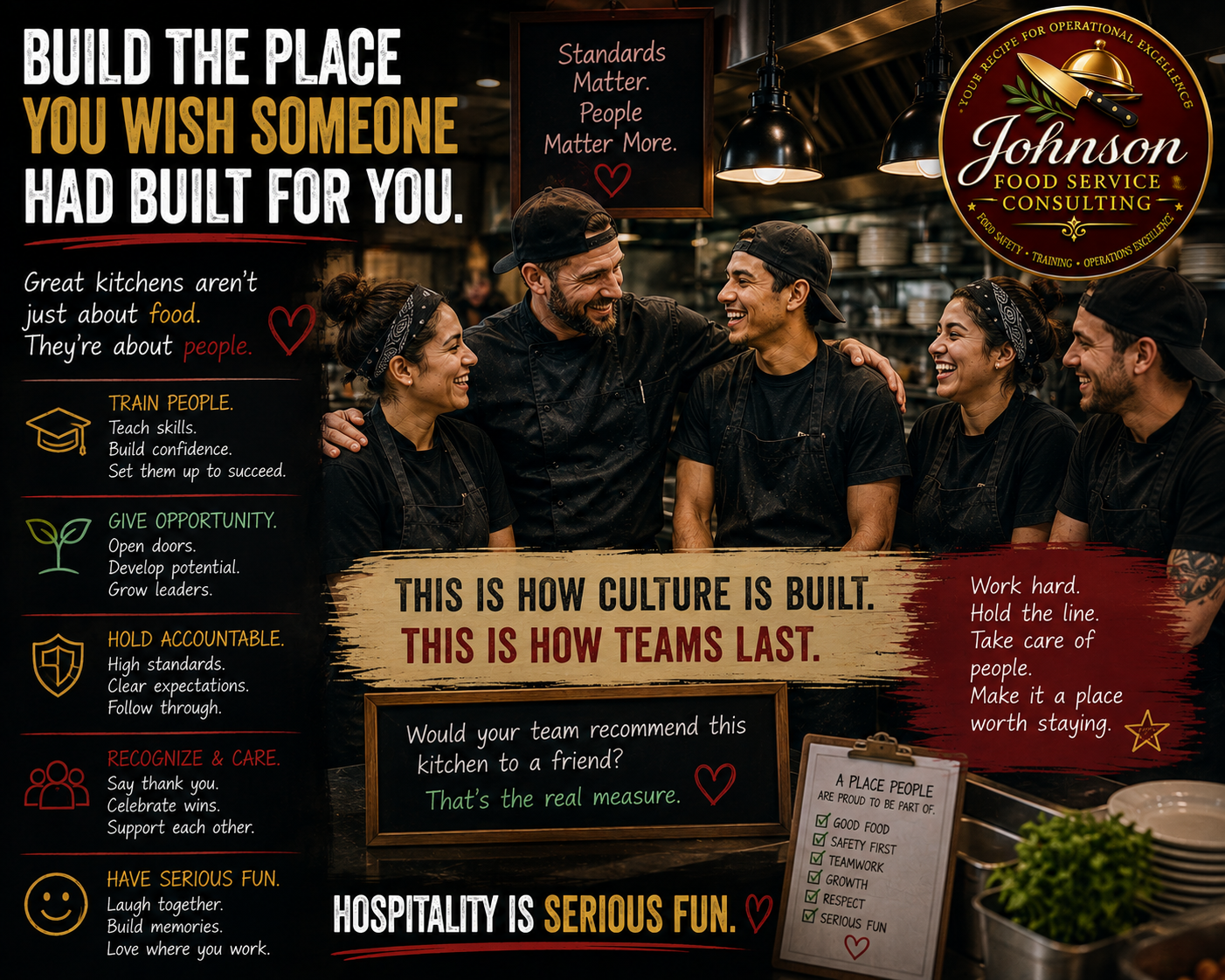
Build the Place You Would Have Wanted to Work
Strong hospitality cultures are created intentionally through training, opportunity, accountability, recognition, and leadership.
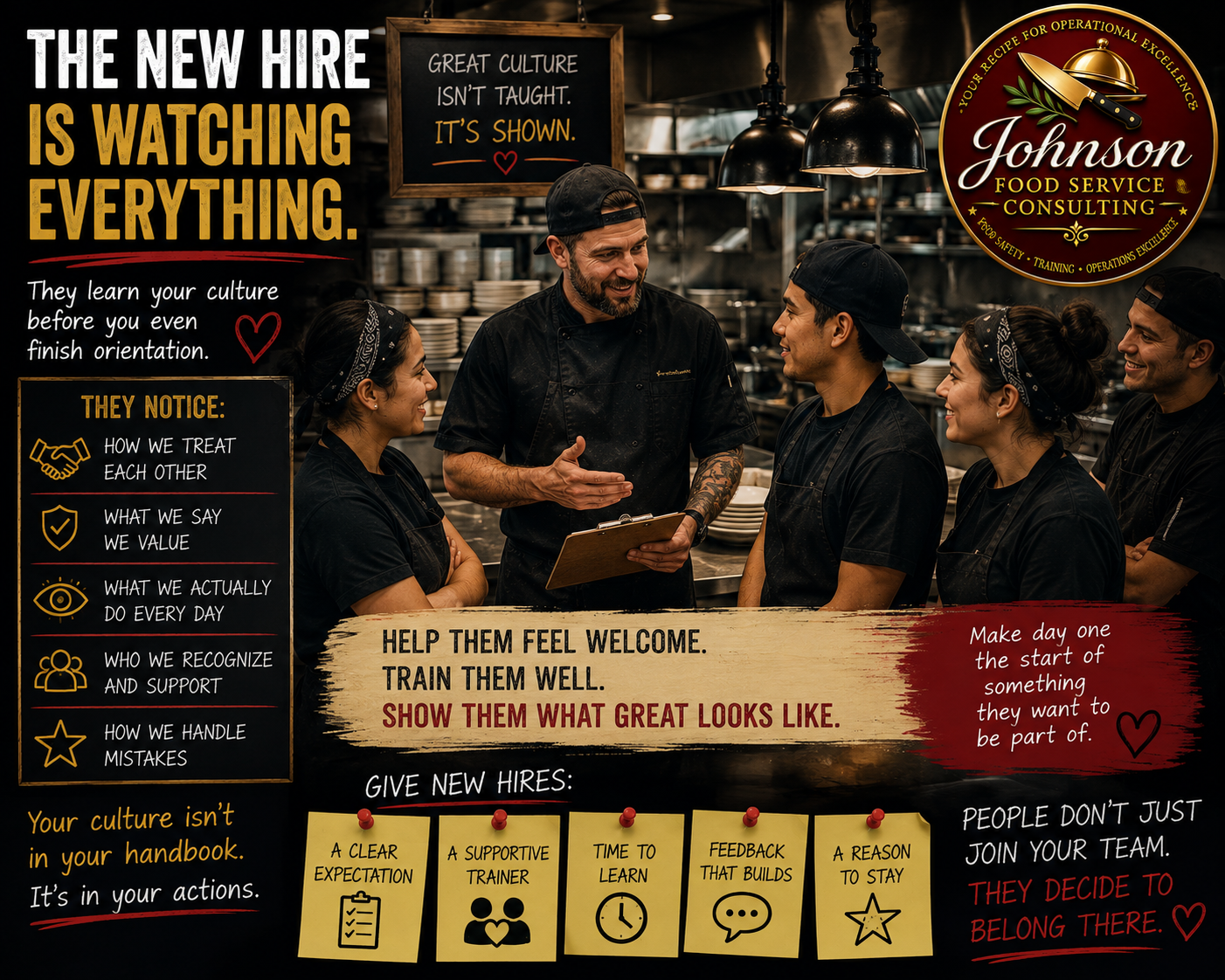
The New Hire Is Watching Everything
New employees learn workplace culture from what they observe—not just what they're told during orientation.
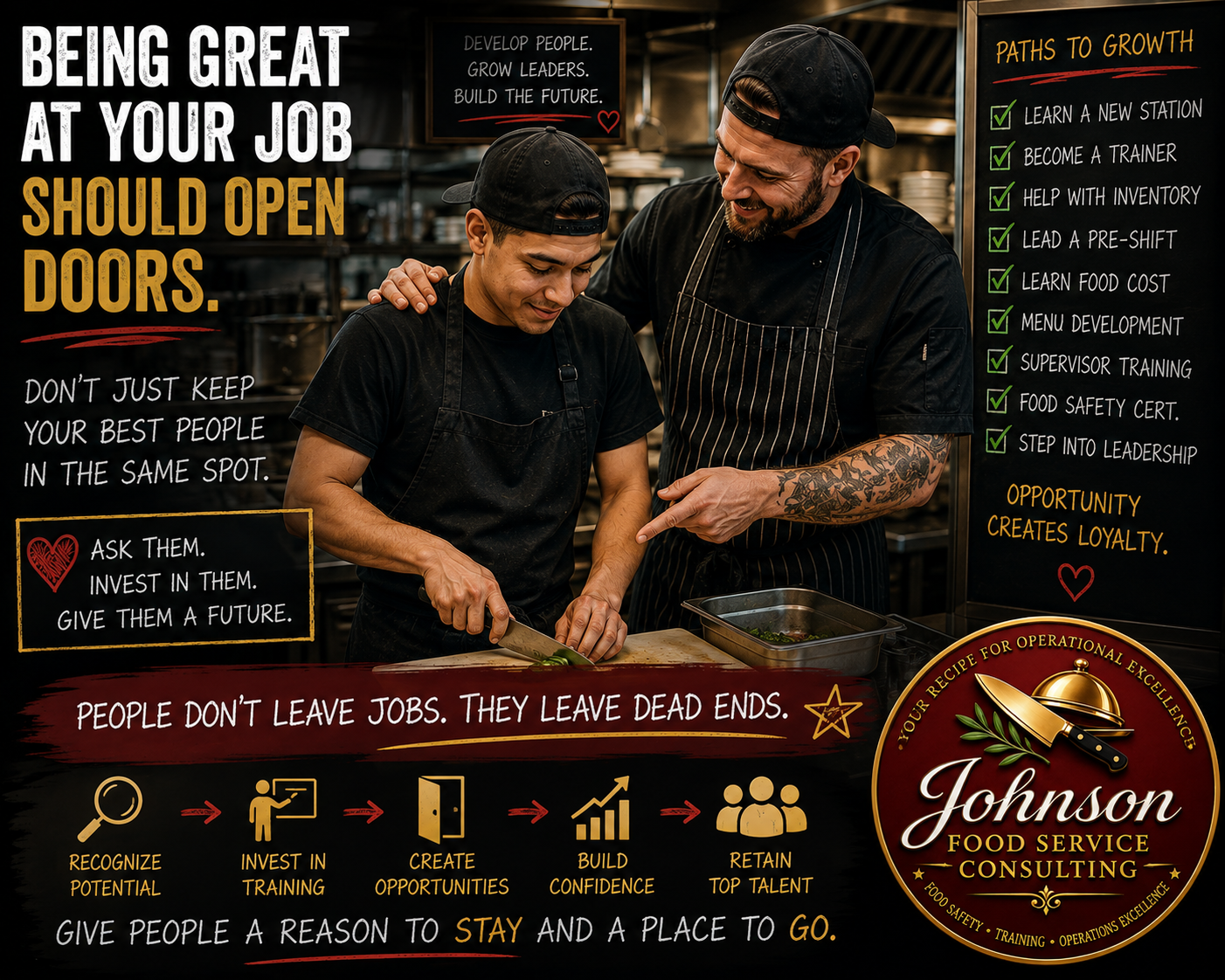
Stop Making Your Best Employees Prove Themselves Forever
High-performing employees need development and opportunity. Without a path forward, even loyal employees eventually look somewhere else.
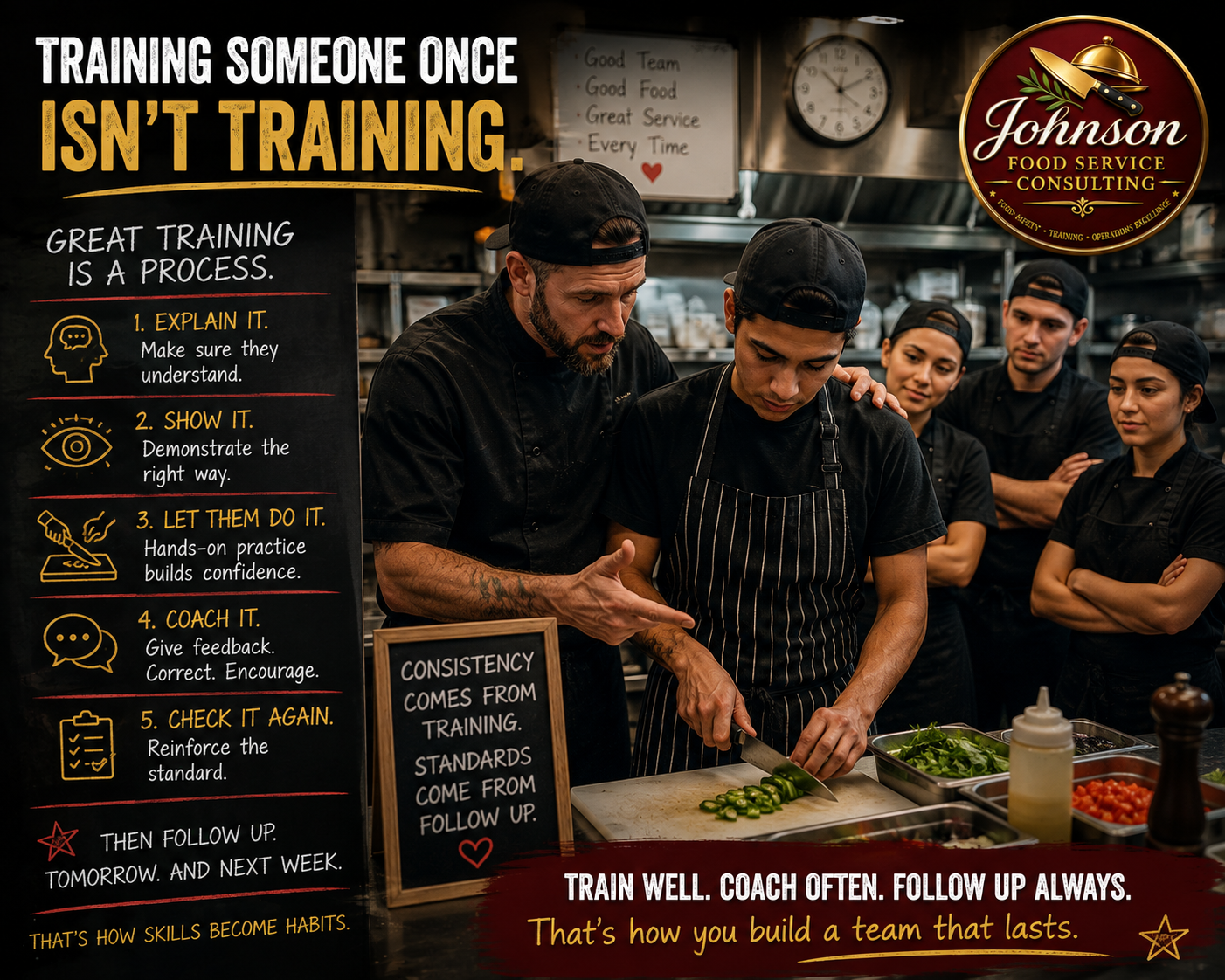
Training Someone Once Isn't Training
Effective restaurant training requires repetition, coaching, follow-up, and accountability—not a single orientation shift.
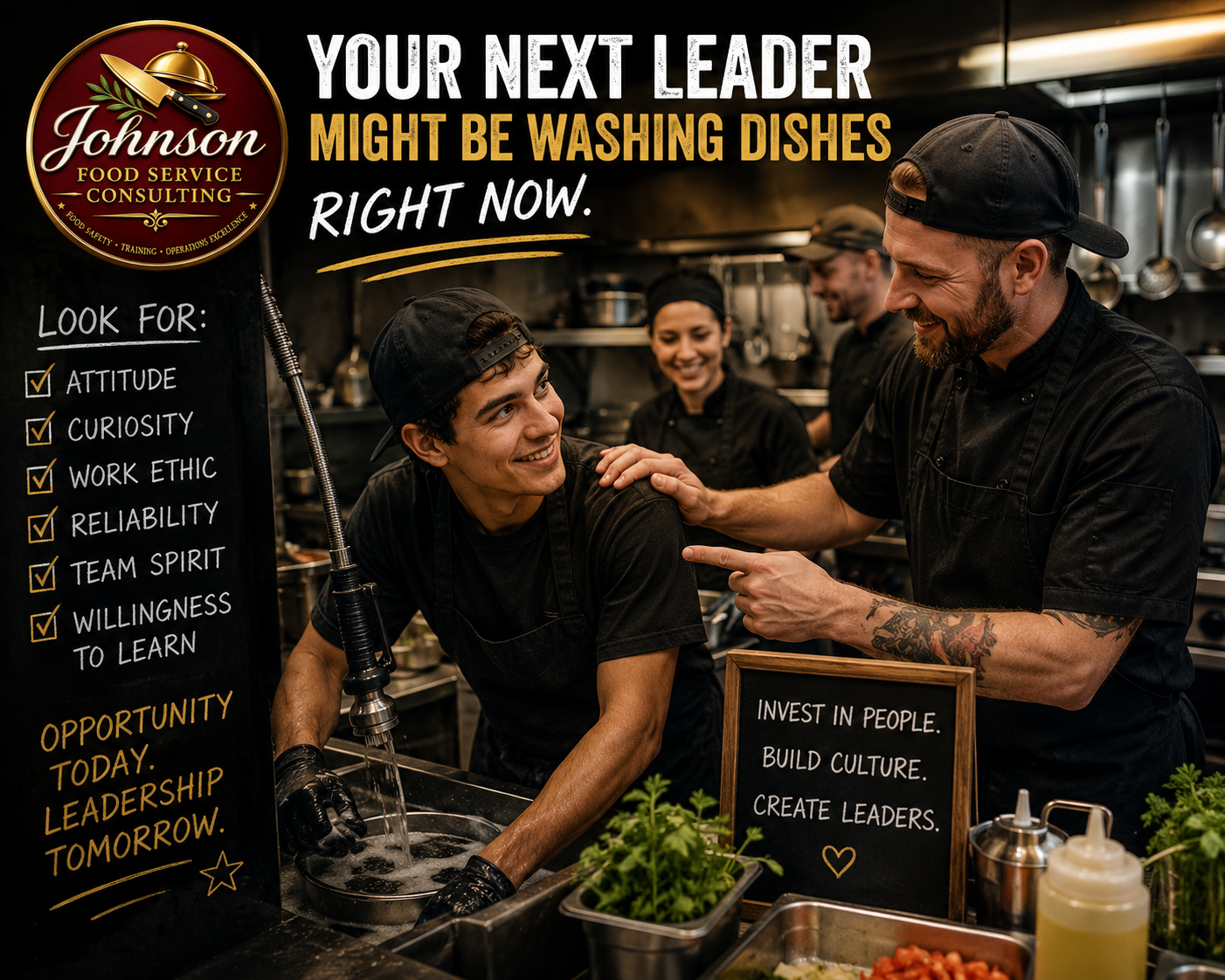
Your Best Future Manager Might Be Washing Dishes Right Now
Great hospitality leaders often start in entry-level positions. Creating opportunities for employees strengthens culture, retention, and the future leadership pipeline.
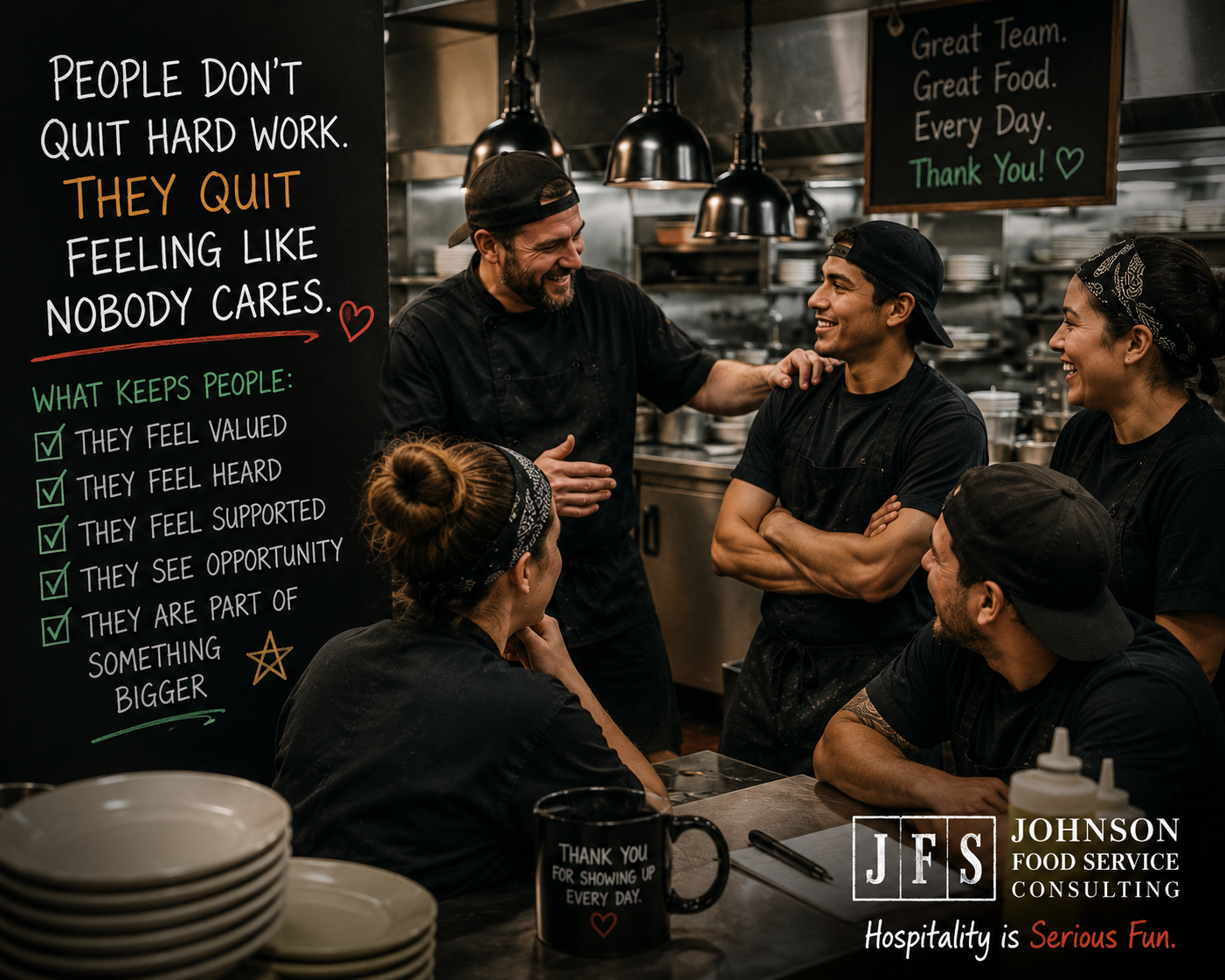
People Don't Quit Hard Work. They Quit Feeling Like Nobody Cares.
Employee retention in hospitality isn't just about pay. Culture, leadership, recognition, and feeling valued all influence whether good people stay.
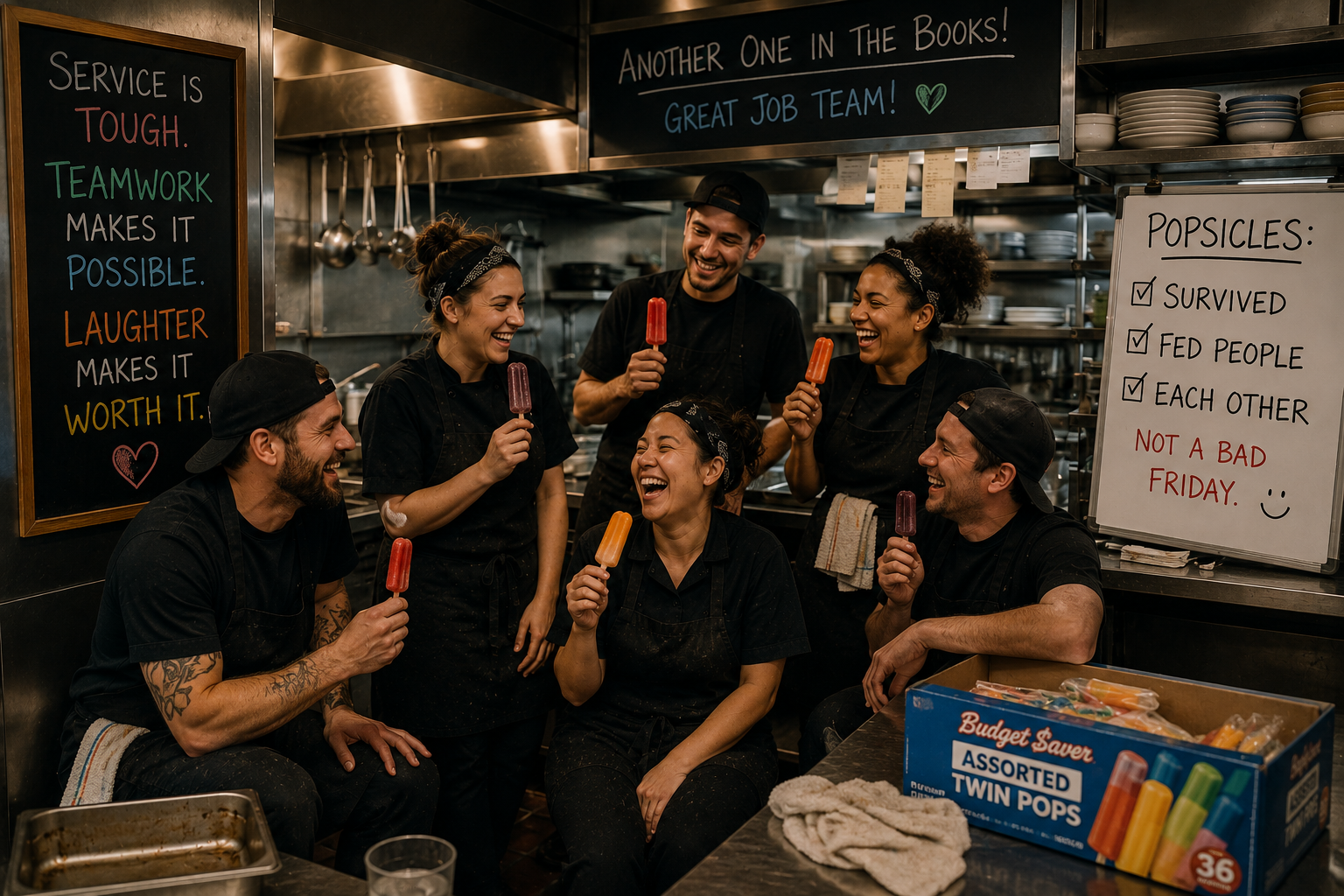
The Best Team-Building Exercise I Ever Saw Cost About Five Dollars
Strong workplace culture often comes from simple acts of connection, not expensive team-building programs.
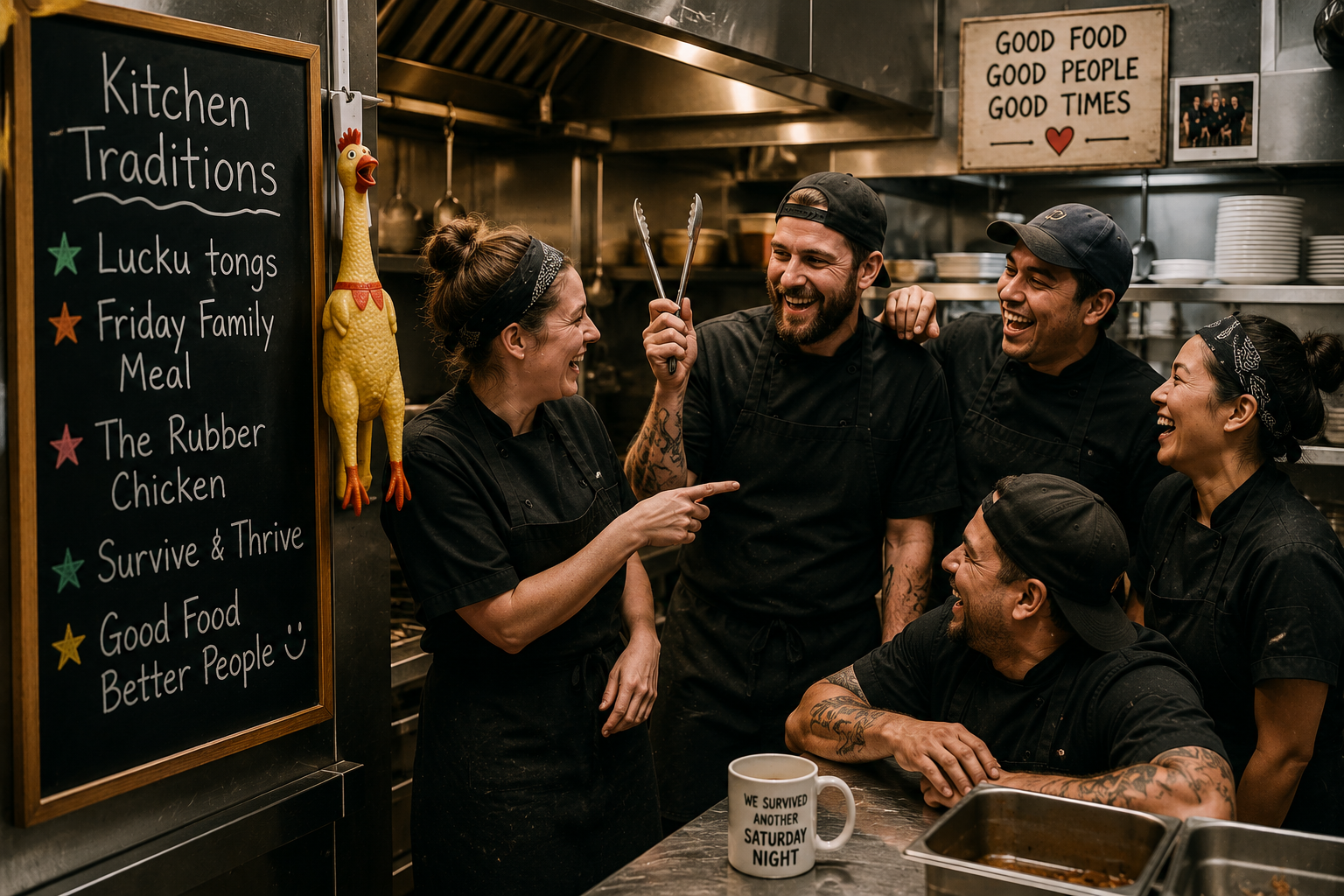
Why Every Great Kitchen Has That One Weird Tradition
Shared traditions create belonging, strengthen culture, and make hospitality teams stronger.
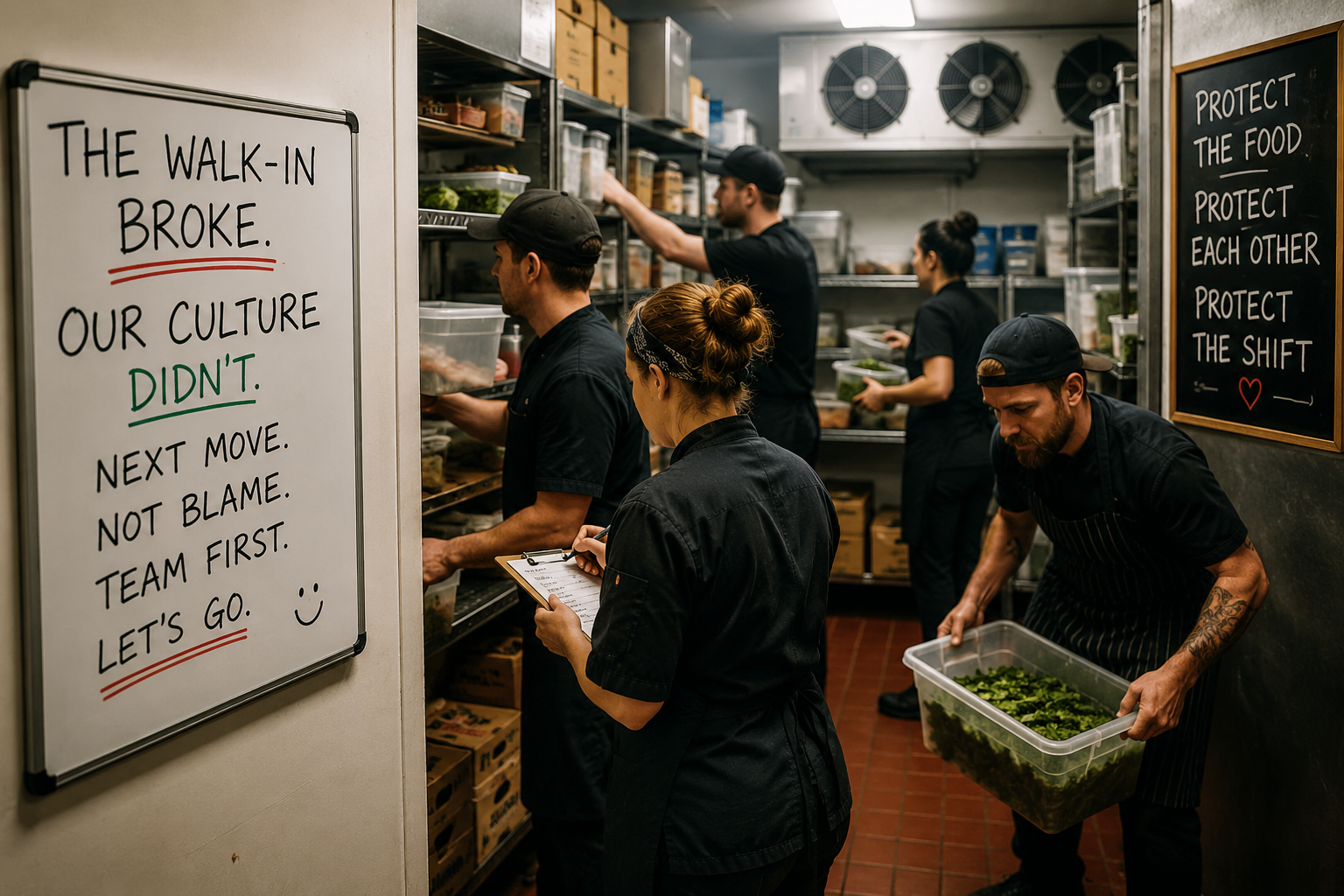
The Day the Walk-In Broke (And Why It Was Actually a Culture Test)
When things go wrong in a kitchen, culture is revealed. Strong teams respond differently than weak ones.
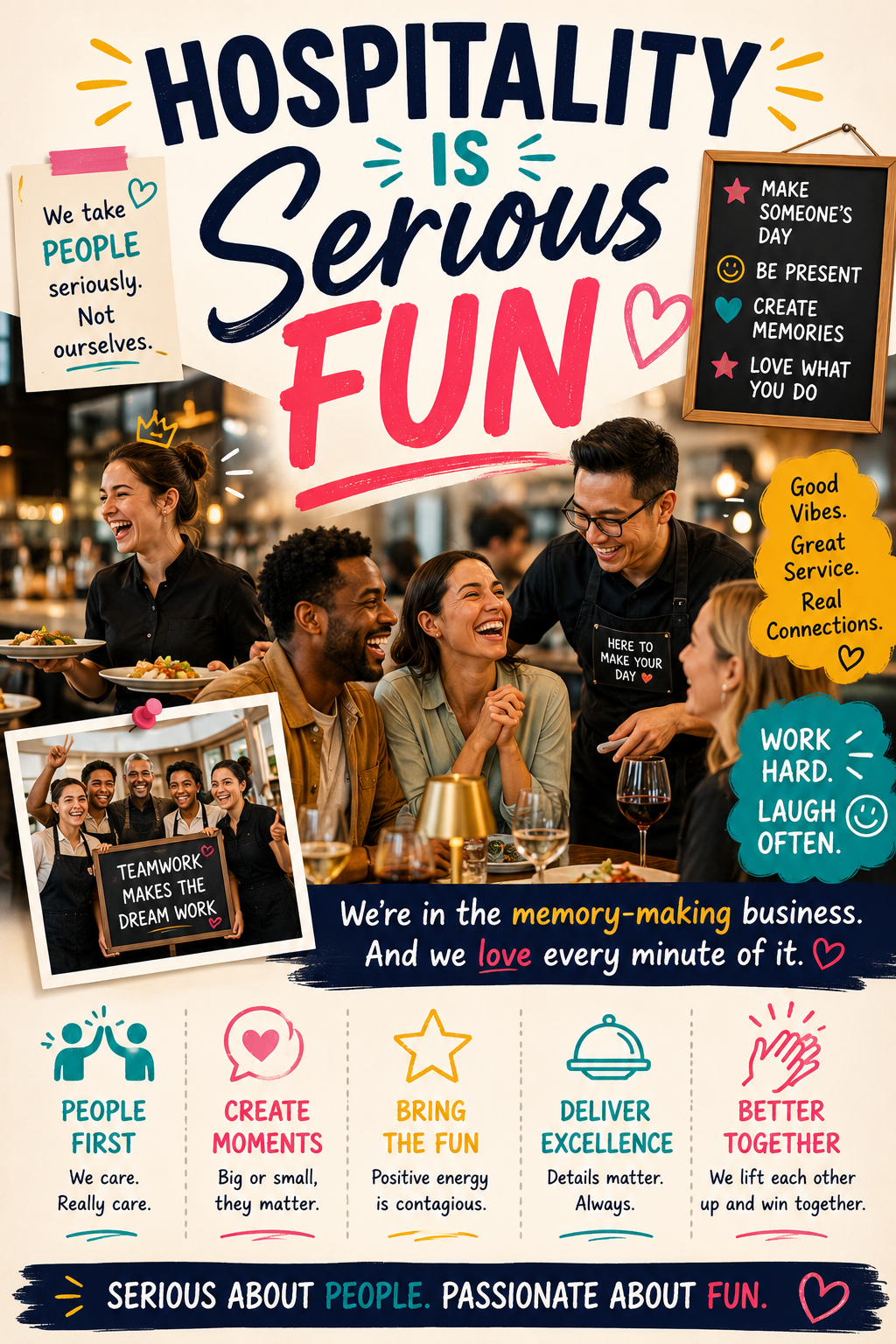
Hospitality Is Serious Fun
The work is serious. The people are serious. But if we lose the fun, we lose part of what makes hospitality special.
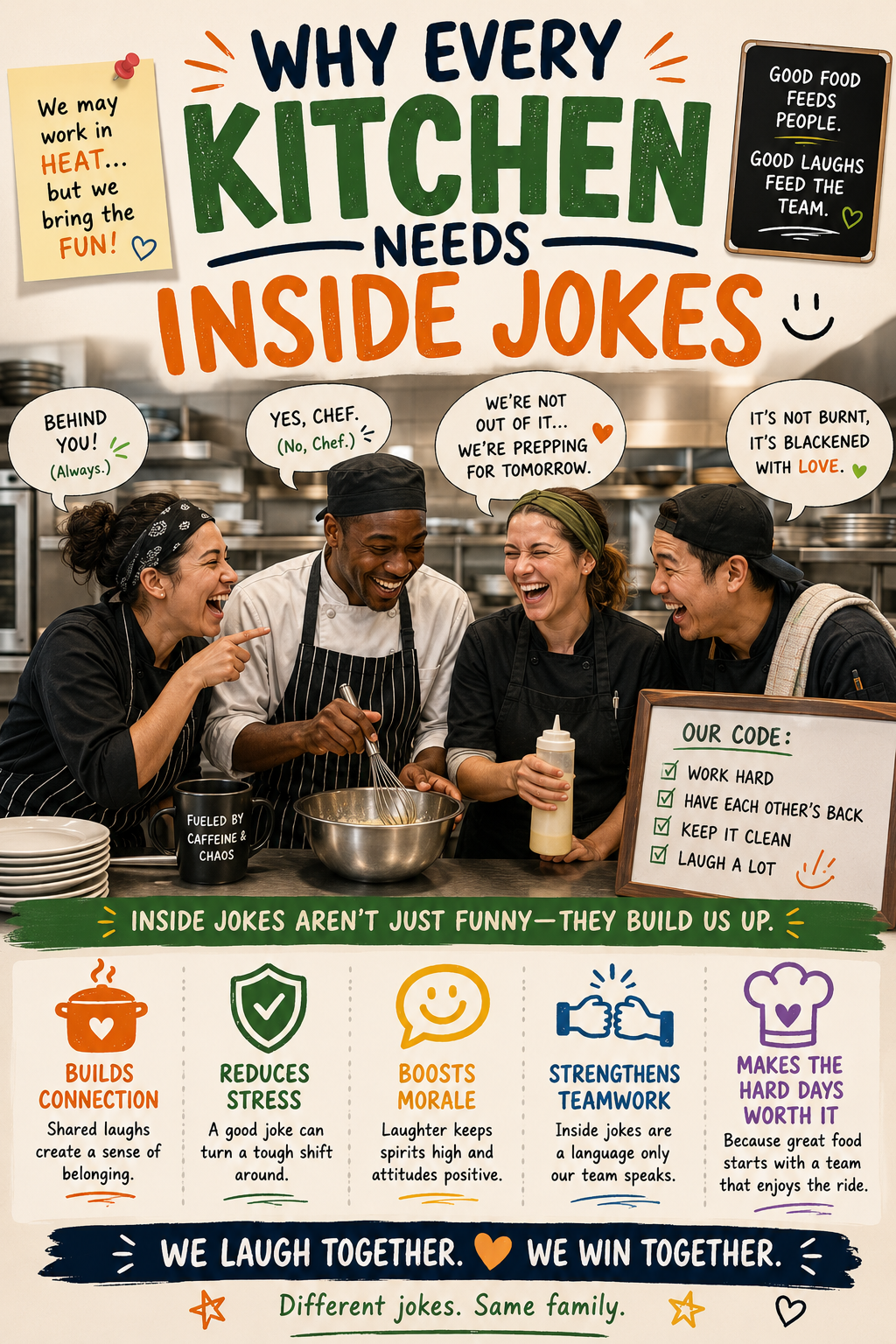
Why Every Kitchen Needs Inside Jokes
Shared humor builds stronger teams, lowers stress, and creates a healthier workplace culture.
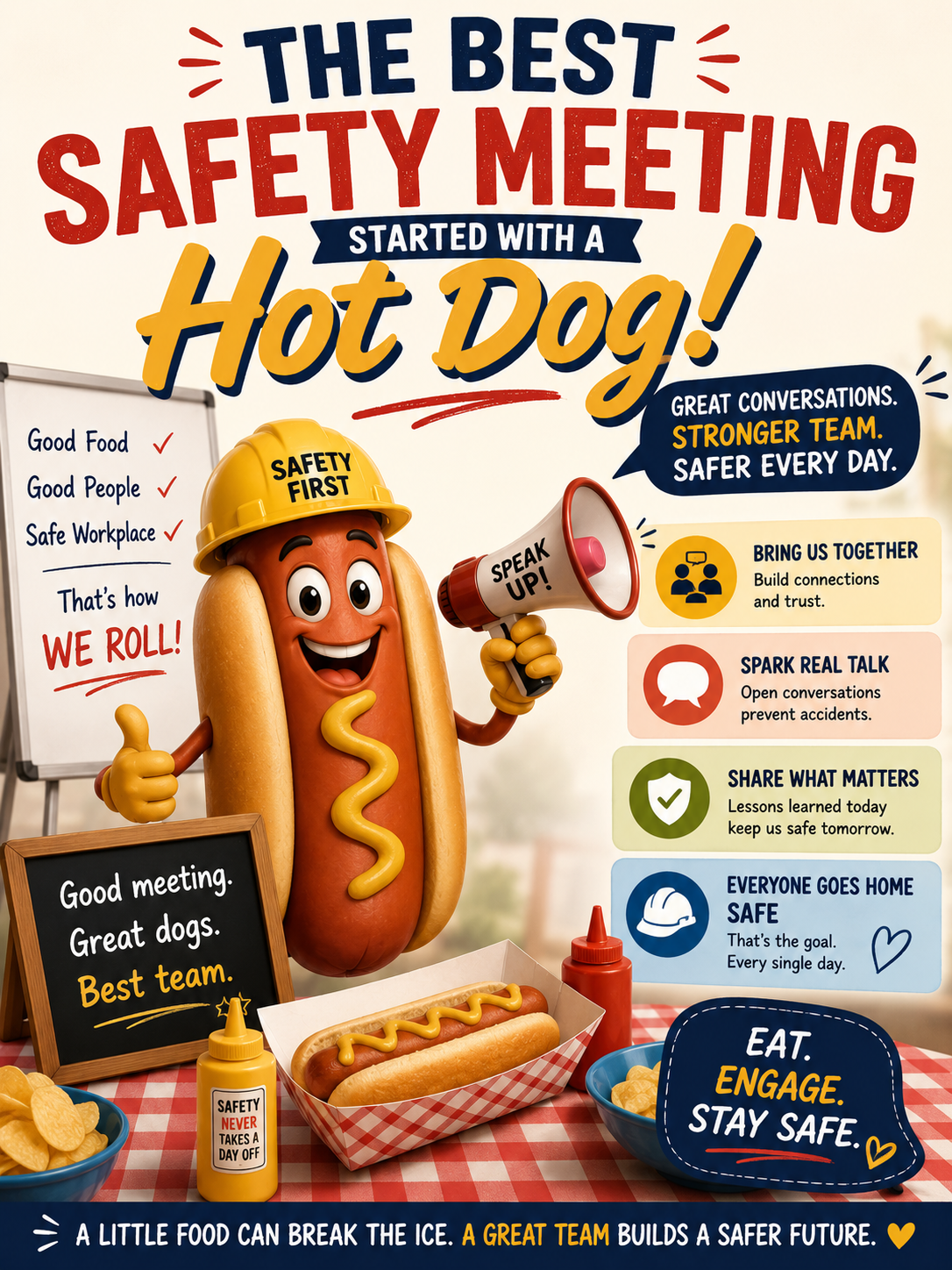
The Best Safety Meeting I Ever Saw Started With a Hot Dog
Sometimes the best training starts with a story, not a slide deck.
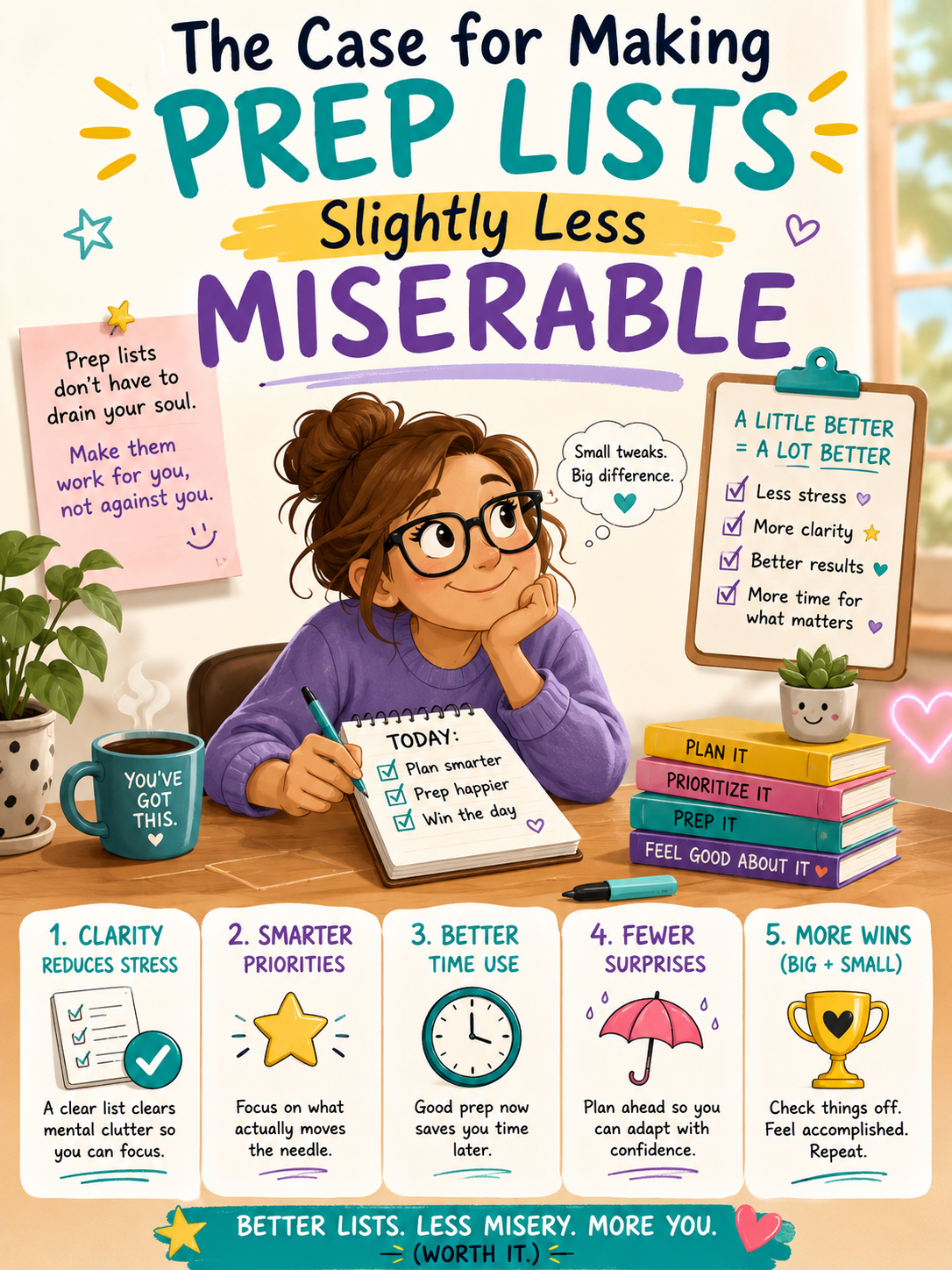
The Case for Making Prep Lists Slightly Less Miserable
Prep lists are essential, but they don't have to feel like punishment.
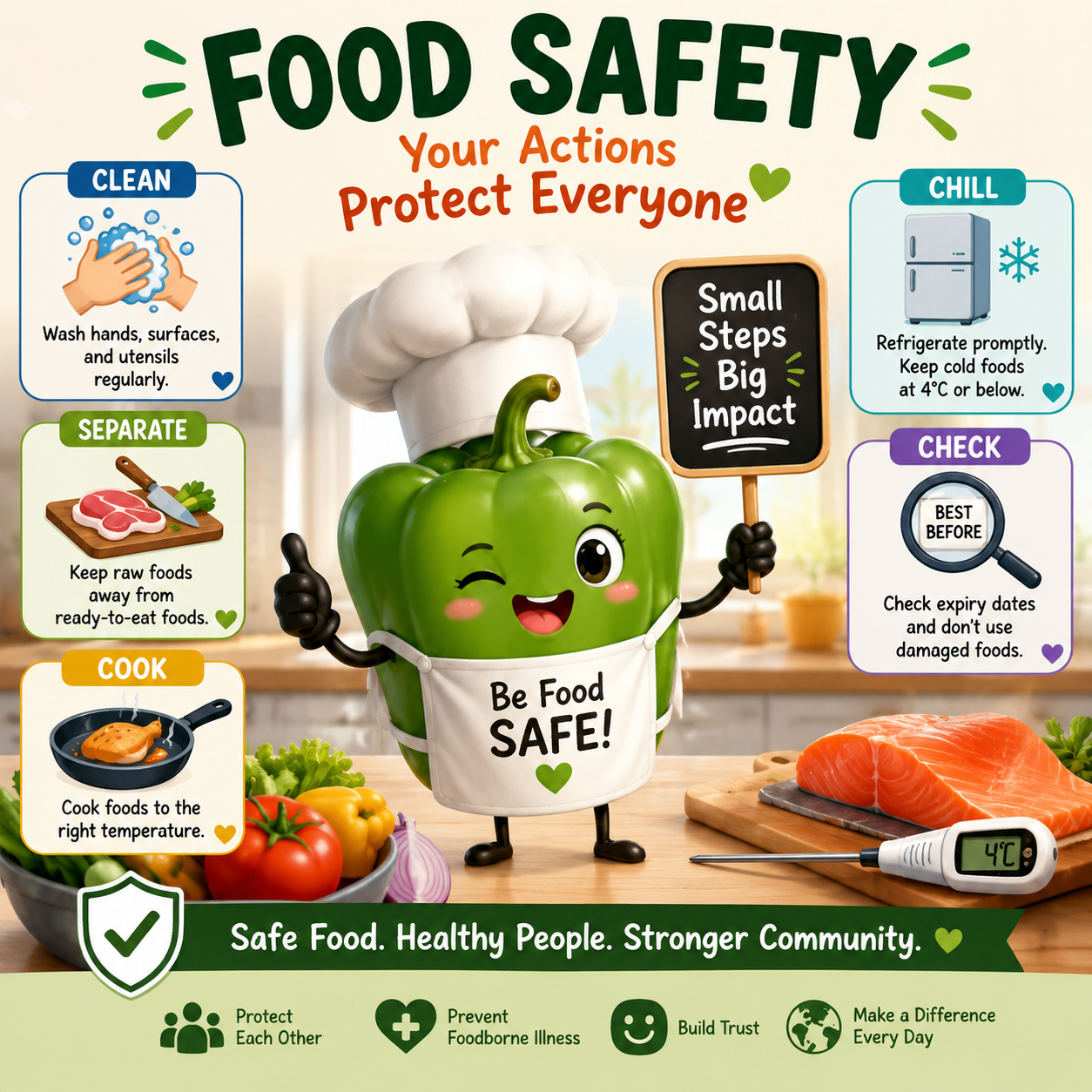
Food Safety Doesn't Have to Be Boring
Food safety training works best when people engage with it. Here's why making it fun improves retention and compliance.